
The Church Doesn't Want To Be Called "Mormon"... Has It Worked?
Looking at Google Search Trends patterns since the church name change in 2018

Introduction
In October 2018, after some time of the "I am a Mormon" campaign, they pivoted to only wanting the church to be identified as "The Church of Jesus Christ of Latter-day Saints." I wrote this post in curiosity of how well this change has been adopted by others - now having been almost 6 years since the announcement.
Data
One great source of data unmuddled by many biases is Google Search Trends. Google Search is not exclusively used (and perhaps used less now with LLMs), but a large percentage of Americans use google and have used it for some time. It's great at getting a sense of the relevance and use of words in near real time. This will be great for our purposes!
People have written great books on findings from Google Trends (which I would recommend). You can see seasonal trends, growth and decline in words and phrasing, and even regional evidence of racism in the US - which may not be the regional division you expect.
Charts
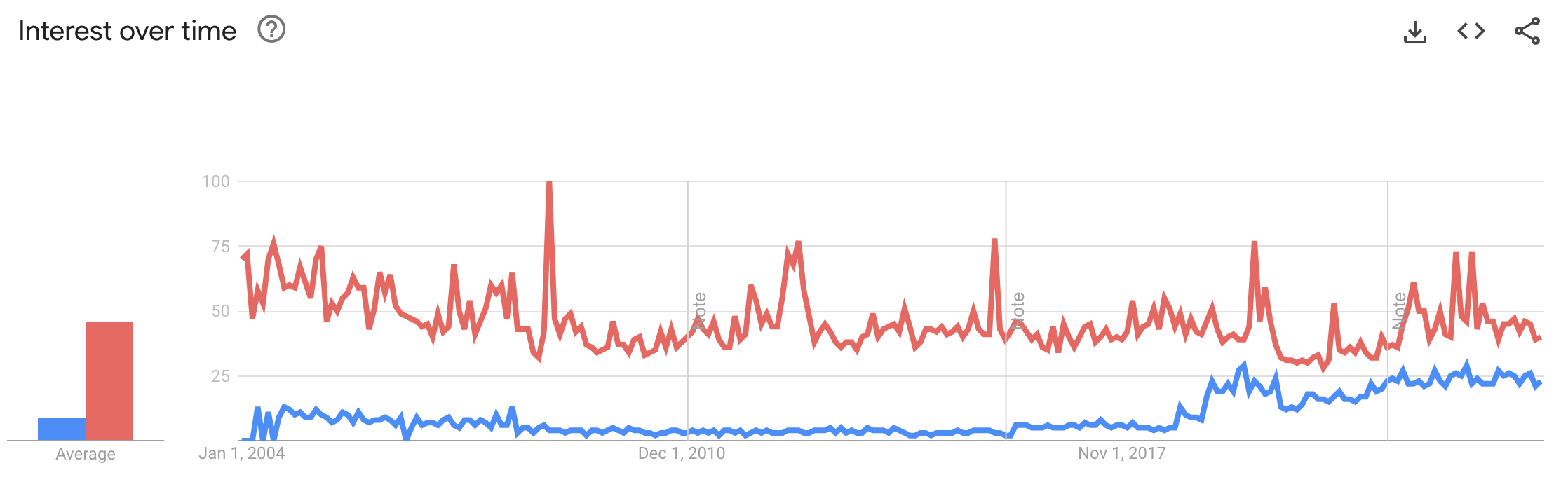
Here you can see "Mormon church" in red and "The Church of Jesus Christ of Latter-day Saints" in Blue. A few thoughts:
From the announcement in October of 2018, you can see the official church name was immediately used more and the use seems to be growing over time.
The "Mormon church" search dropped a bit immediately, but has since recovered most if not all lost ground.
"Mormon church" is still consistently used more, but its clear the gap has closed a bit since the announcement.
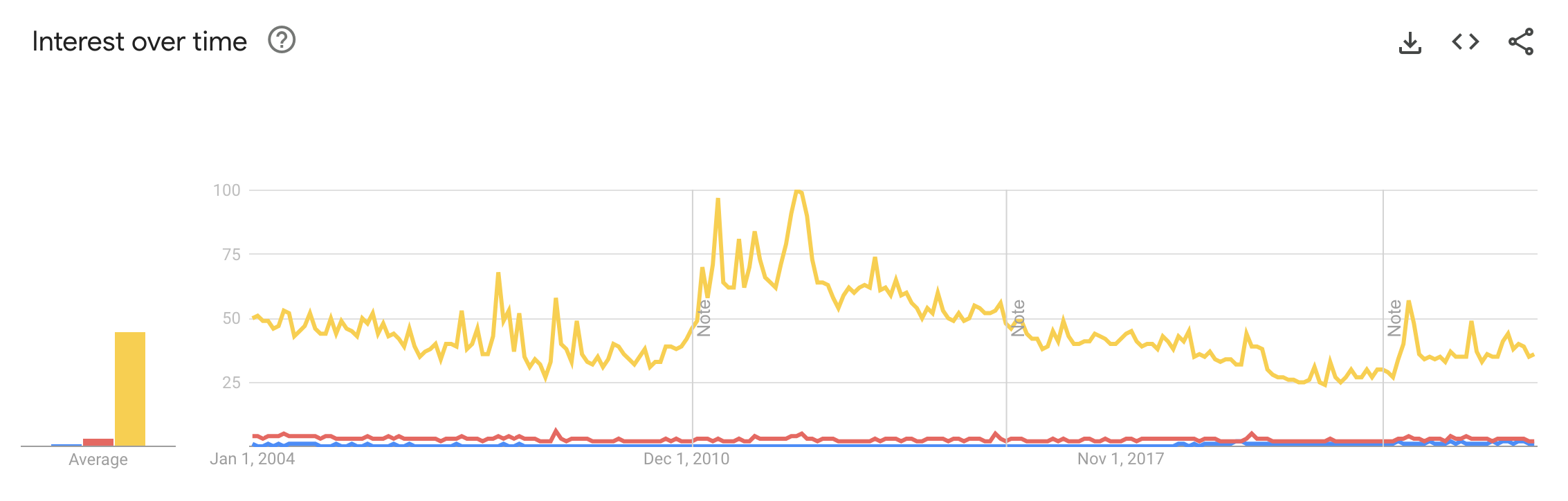
In the chart above, the yellow line represents the word "Mormon." As you can see, "Mormon" is searched for much more often than both "Mormon Church" and "The Church of Jesus Christ of Latter-day Saints." This term is most likely more helpful in discerning when the LDS church is in the news.
Can you guess what the spike is in 2012? It's when Mitt Romney ran for the US presidency. Despite the church spiking for being in the news here and again since, the overall search volume has decreased over time more recently. This trend was evident before the name change, but the search term volume has more or less flat-lined in the last year
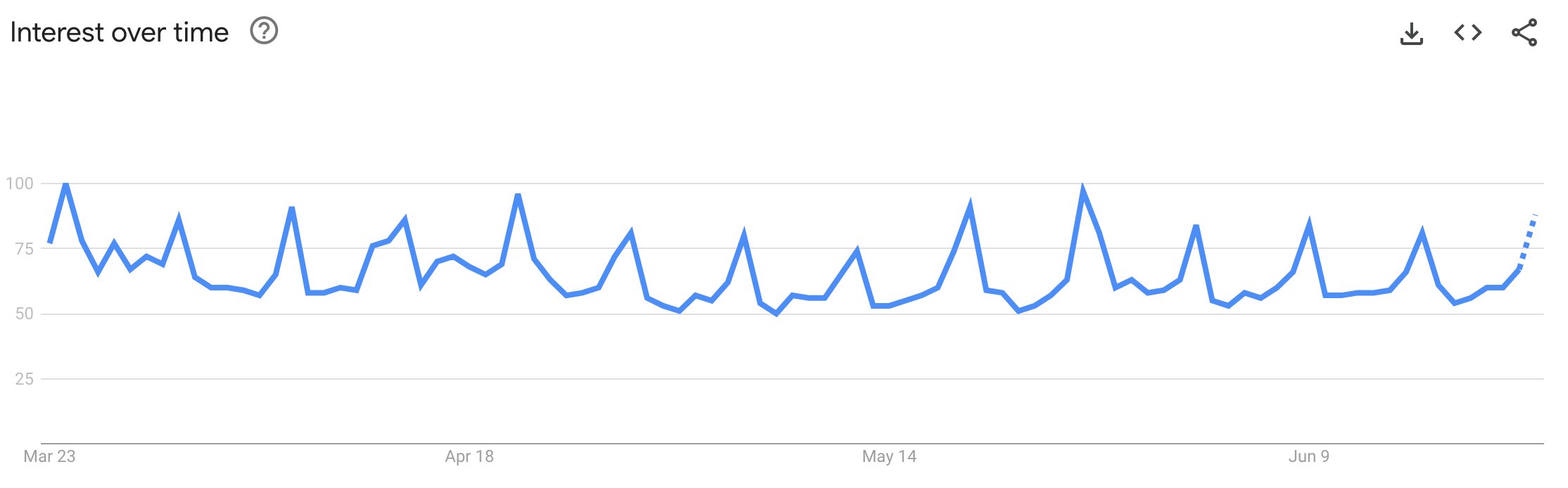
.We've looked at some of the macro trends the past two decades, now lets look at some microtrends.
The chart above is the "Mormon" search term over the past 90 days. As you can see, every week it spikes - that is, every Sunday it spikes. Perhaps this is members finding a church building or something else. I'm honestly not certain.
If you are interested in the post, I encourage you to dig around on Google Trends. Perhaps you could find some interesting things I missed, or you could learn about a different topic altogether you're interested in.
Trivia and Checking my Assumptions
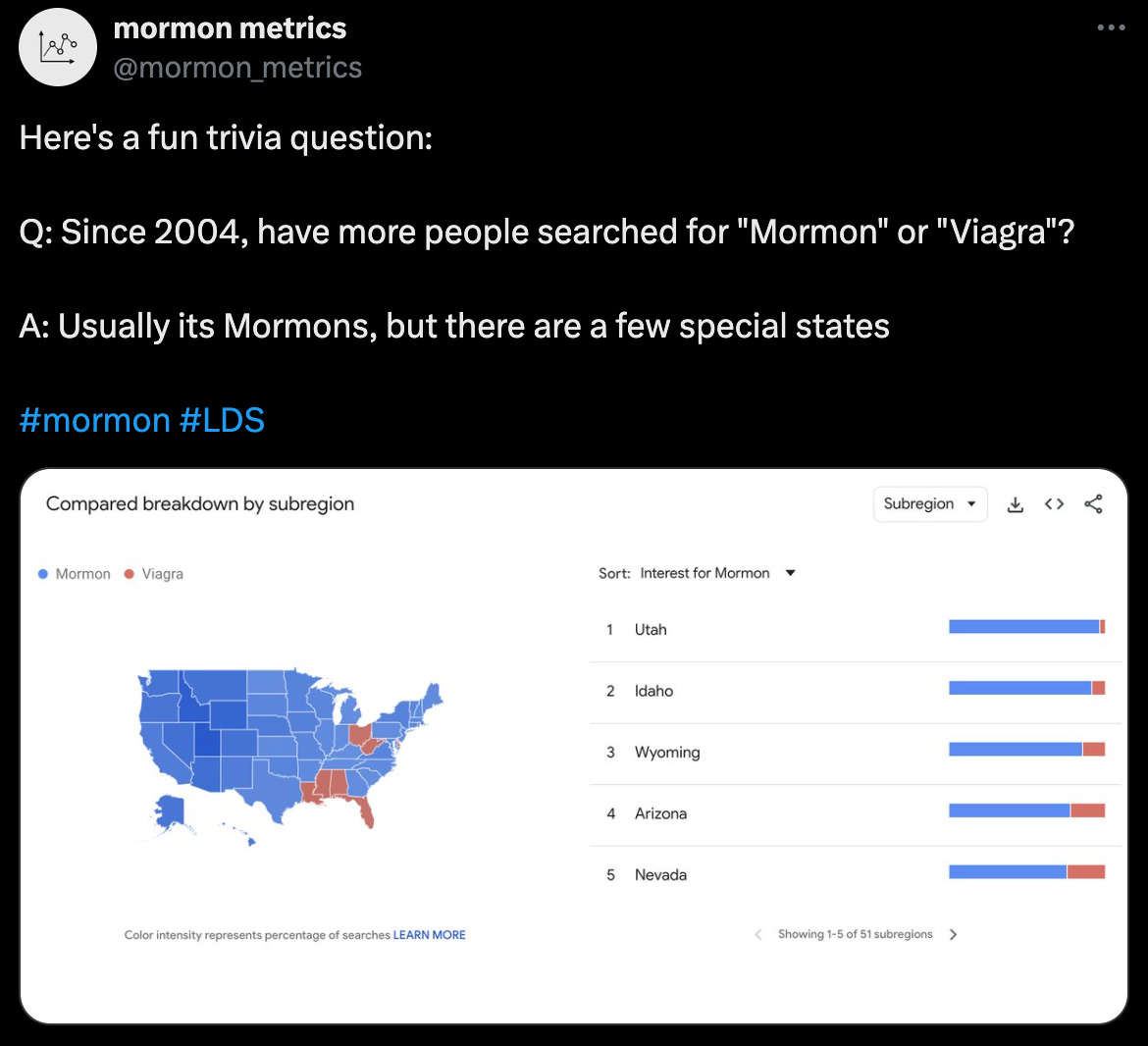
Well, I was trying to find words that were searched in similar volume to "Mormon" and was just trying random words. Turns out, people search "Carrot" and "Viagra" at a similar volume. The graph in this tweet shows the search volume of "Mormon" vs. "Viagra" by state. I'm sure there are plenty others searched at a similar rate, but those are of the first ones I found.
If you were to guess the largest recent spike for "Mormon" google search volume in the last decade, when would it be?
I thought maybe ensign peaks, mormon murder suicides, or the AP article about bishops and abuse. Nope, none of these made that much of a dent. Well, looking back at Figure 2, this happened in June of 2022 which correlates perfectly with the spike from the Netflix show Under the Banner of Heaven. So, the biggest spike in the past decade wasn't regarding recent scandals in the church(which were big things in my mind), it was just a Netflix show. To be fair, the Netflix show was about a scandal, but one that happened over 40 years ago.
To me, the events listed above were big events that I perceived everyone talking about. But, in reality, these scandals didn't really draw eyes nationally. The moment when people started really searching Mormonism is when a TV show came out on Netflix with a popular actor. My takeaway from this is that people in the US aren't usually thinking about Mormons or Mormon happenings. In fact, they may think about Mormons as much as they think about carrots or viagra, but how much do people really think about those things? What I mean by all of this is big things that happen in Mormon land typically barely make a dent outside of the bubble. And, pretty much I just need to check and correct my assumptions about this.
Discussion
Why has the Church of Jesus Christ of Latter-day Saints not been talked about as much? Is this just gradual drop-off from the 2012 Romney spike or something else?