


As a reminder, click this link for the 20% off lifetime deal for Mormon Metrics Pro which ends tonight, please subscribe premium to support my work and get access to the archives, premium posts, the ARPA dashboard, and a pro only group chat for Q&A etc. 🙂 Before we get into today’s topic: I created a 6-minute video walkthrough showing the functionality and usefulness of the ARPA that you can view below if you want more information on the tool.
Introduction
I have written in the past about this topic, but it was generally analyzing one survey series like the Cooperative Election Study. But now, we have a much better tool to look at these questions combining over 100 surveys (ARPA!). I figured it would be a good time to show you all the power of a tool like this. Just clicking a few buttons we can do world class analysis (with some good looking data visualization as well) and get the most definitive answers available anywhere for these questions.
First, can we see LDS political movement the last 15 years?
Yes!
The general US population has shifted right the last 15 years (+2.5 percentage points) and every other religion measured here also shifted to the right with the exception of Latter-day Saints who went 2 points to the left.
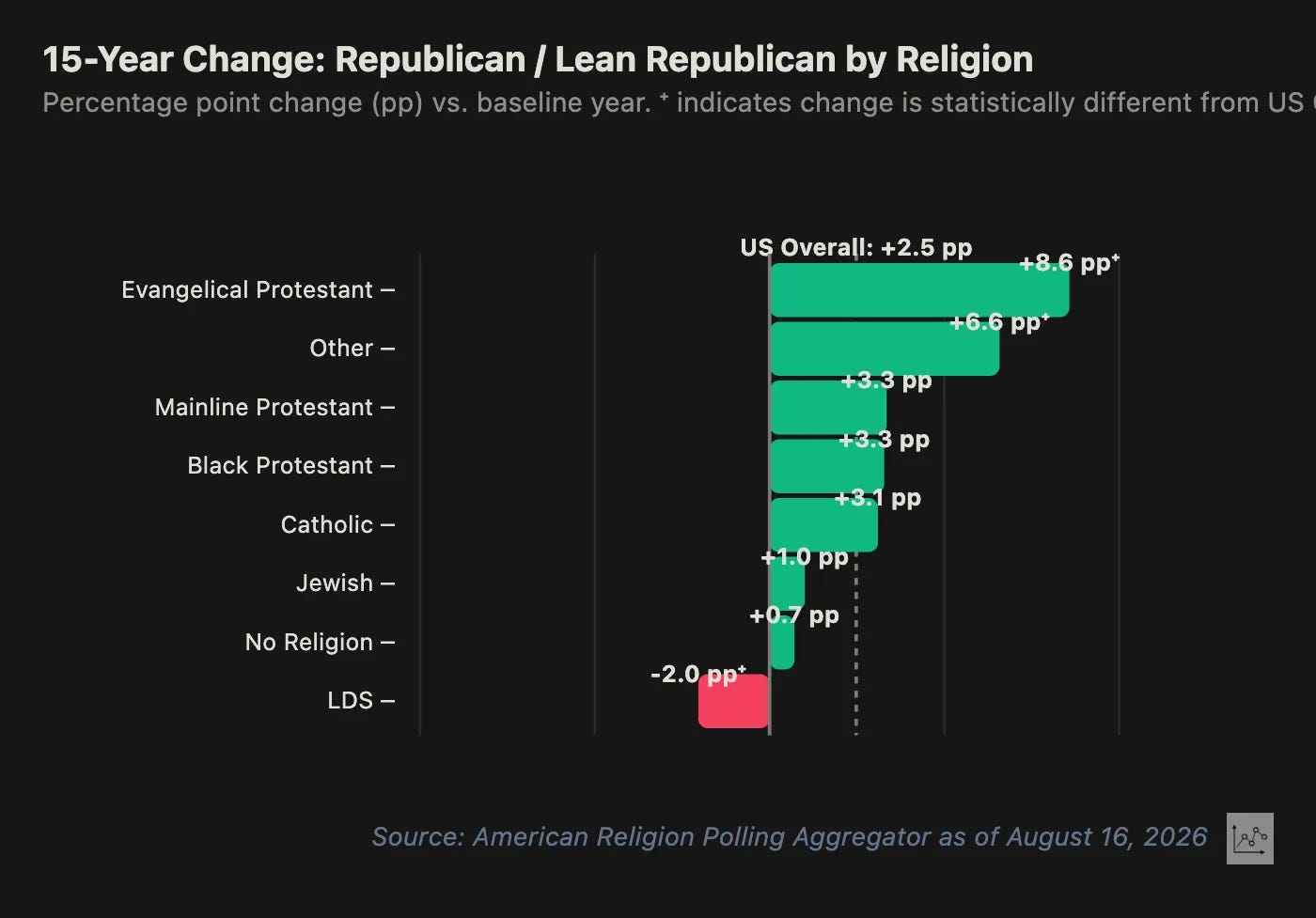
This was a similar directional finding when just looking at the Cooperative Election Study, but adding thousands more respondents and dozens more surveys confirms this trend.
Also as you can see by the * in the chart above, the LDS decline number is statistically different (and lower) from the US overall movement. LDS are moving in the opposite direction from the US overall and other religions.
LDS Are No Longer The Most Republican Religious Group
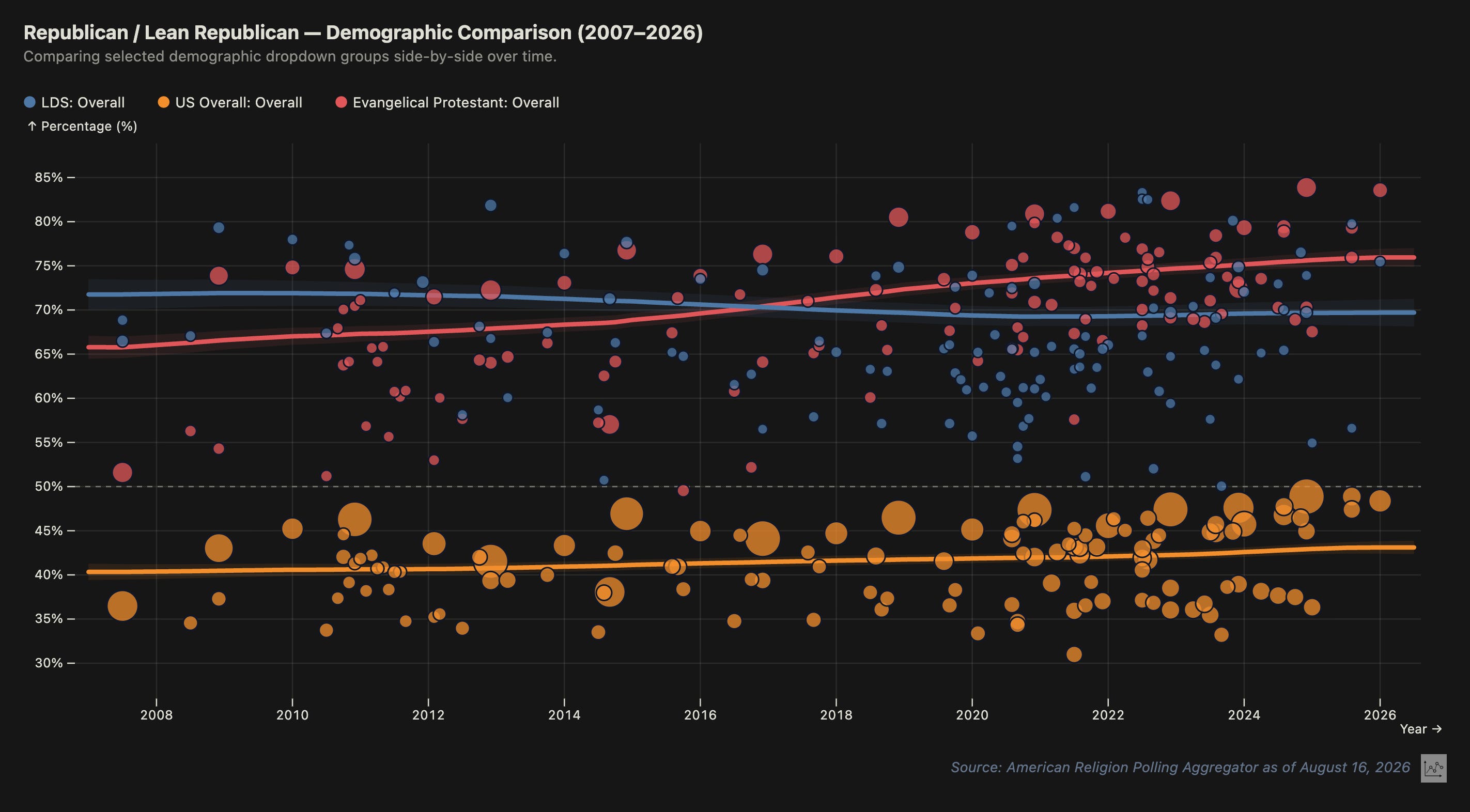
This chart tells an interesting story. In 2007, we see a clear separation between Evangelical Protestants and Latter-day Saints with Latter-day Saint Republican Party ID being higher. But, right around the 2016 mark, there is a switch where now Evangelical Protestants take the top spot as the most Republican group. Evangelicals noticeably drift toward the Republican party while Latter-day Saints drift away at the 2016 mark!
Of course, though, while LDS have shifted a bit left. They really haven’t moved that much. After all, 7 in 10 LDS still lean or identify as Republican.
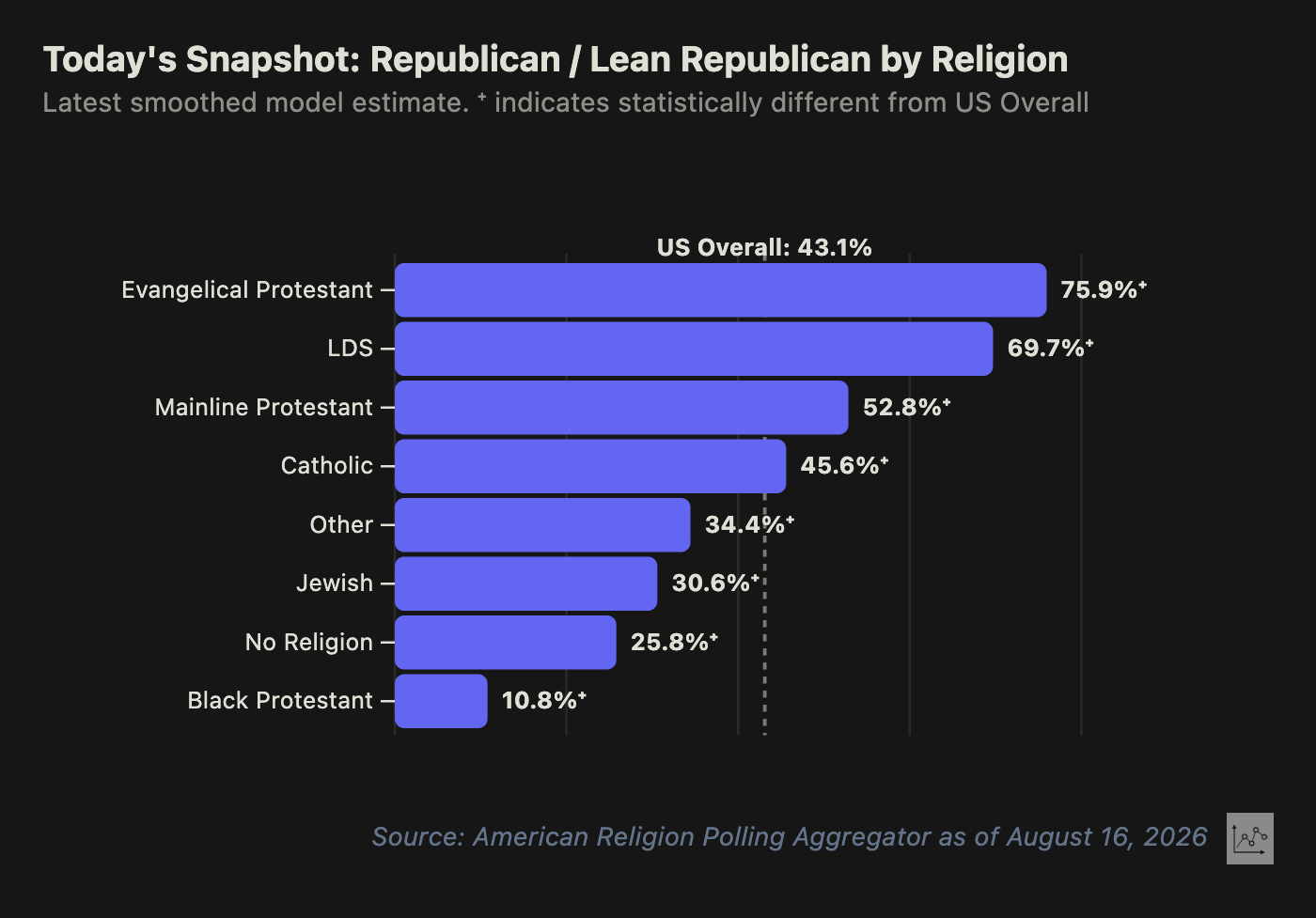
According To ARPA, Which LDS Demographic Groups Have Shifted In The Trump Era?
I found two statistically significant demographic declines the last 15 years using ARPA. These two groups (shown below) are the most likely cohorts driving this movement away from the Republican party.
Group 1: Younger Generation of Latter-day Saints

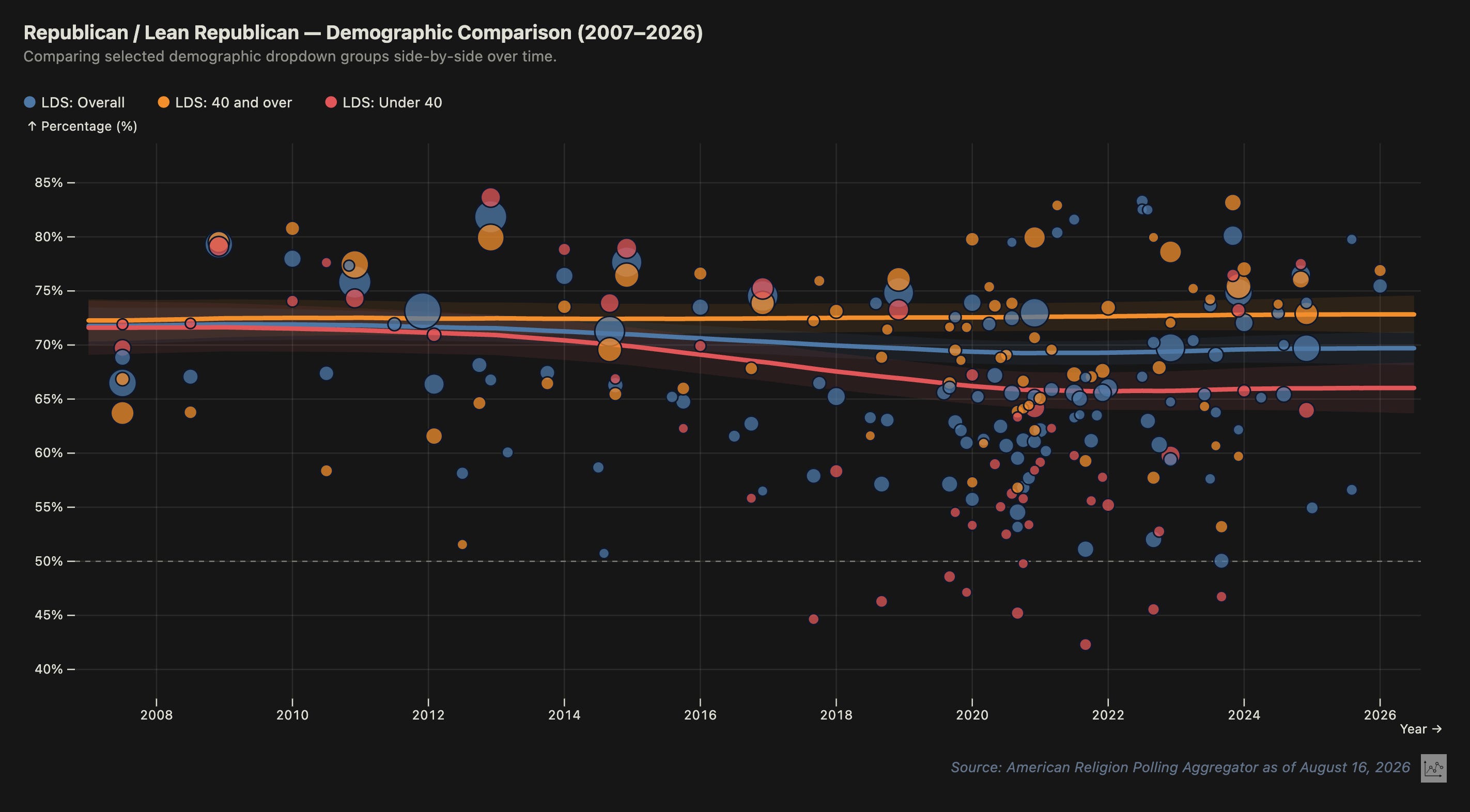
From the chart above, you can see a fascinating trend. At the beginning, we don’t see much difference in our trendline across age, but in the Trump era an age gap has emerged. Older LDS haven’t changed much before or after Trump years, but younger LDS have drifted 5 points to the left (statistically significant).
Group 2: Church Attending Latter-day Saints Have Decreased In Republican Party Affiliation

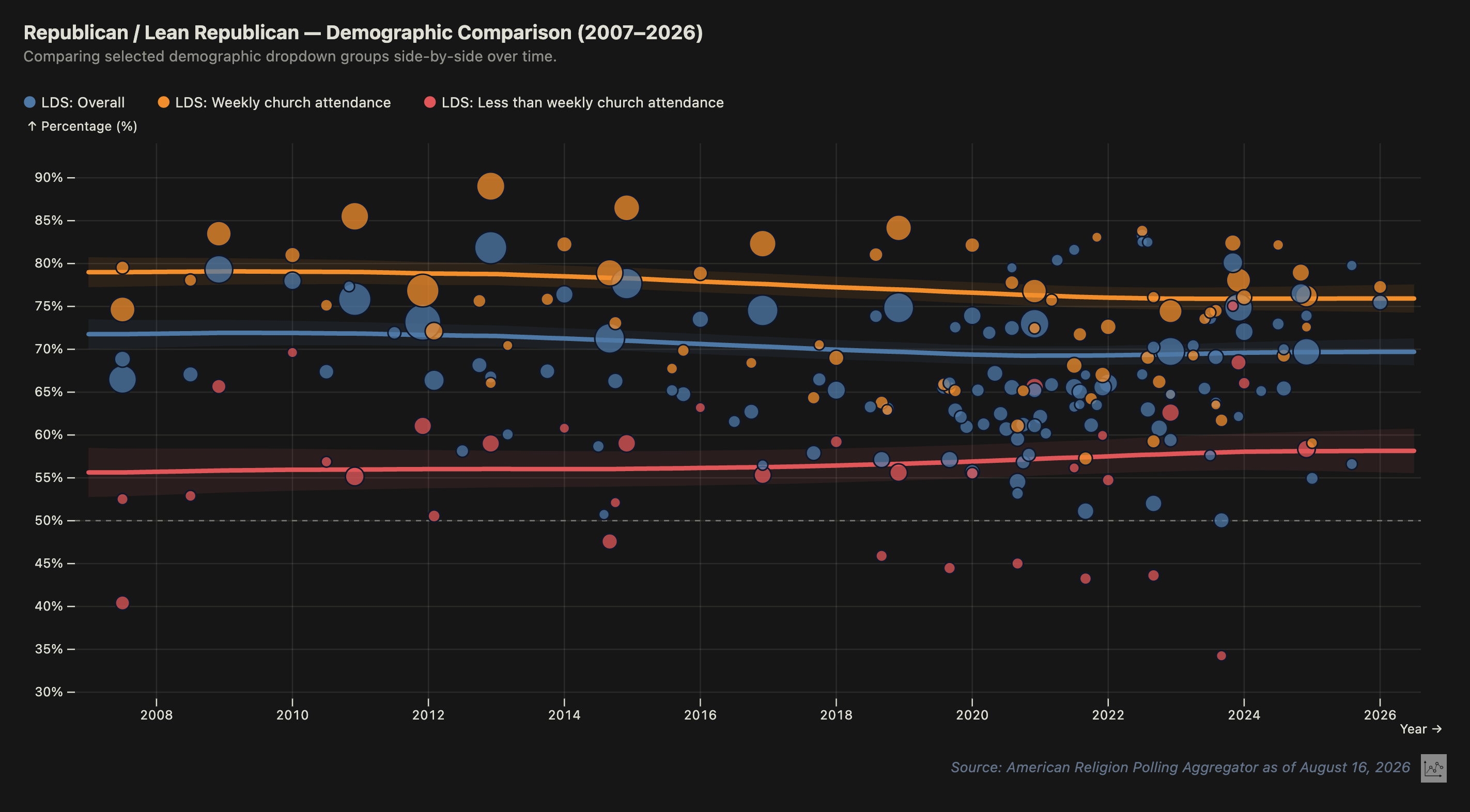
Church attending Latter-day Saints have also drifted from the Republican party (-3pts), though the decline is a bit less from the under 40 group, their decline is still statistically significant.
What’s perhaps more interesting is that our trendline estimates show Less Active Latter-day Saint’s are moving in the opposite direction (toward the Republican party!). This also corresponds with my previous analysis finding that Exmormons are the most Republican Ex-religious group and have moved toward the Republican party over time!
While I won’t show a chart for this, one other force to keep in mind is the secularization force. Over time, Latter-day Saints (as well as several other Christian religions) have seen a decrease in religious practice. As you can see from the chart above, those who attend church less (while they seem to be slowly moving toward the Republican party over time) they start from a lower Republican baseline. So, as more Latter-day Saints move into lower practicing groups, there is likely also some movement away from the Republican party happening in tandem.
Conclusion
So, how is this analysis different from what I’ve done before? This analysis is different because it is more rigorous. Instead of looking at one survey or survey series, this analysis is powered by ARPA combining over 100 surveys and providing the most definitive estimates available today.
Let’s sum up a few takeaways…
While Latter-day Saints don’t see a political realignment in the Trump era, they have moved away from the Republican party and are fighting against the national political headwinds which are moving rightwards.
While previously Latter-day Saint’s were the most Republican religious group in America 15 years ago, now Evangelicals have taken their place.
The younger LDS and the LDS church attending cohorts seem to be driving this change as both cohorts saw statistically significant declines in Republican party affiliation.
Let me know what you think about this analysis. Is there anything I missed? Would you add anything to what I shared today?
See you next week!