
Fact Check: Does Utah Really Have The Largest Homes?
Fact Checking a Chart I found on the Internet


While I wasn’t able to accomplish as much as I hoped this past week (and plan on sharing the “Are Latter-day Saints beating the secular headwinds?” post next week), I do have a fun post for today which is fact checking this chart I found (as seen below) online a while back. Do Utahns have the LARGEST homes on average? Fact or fiction?
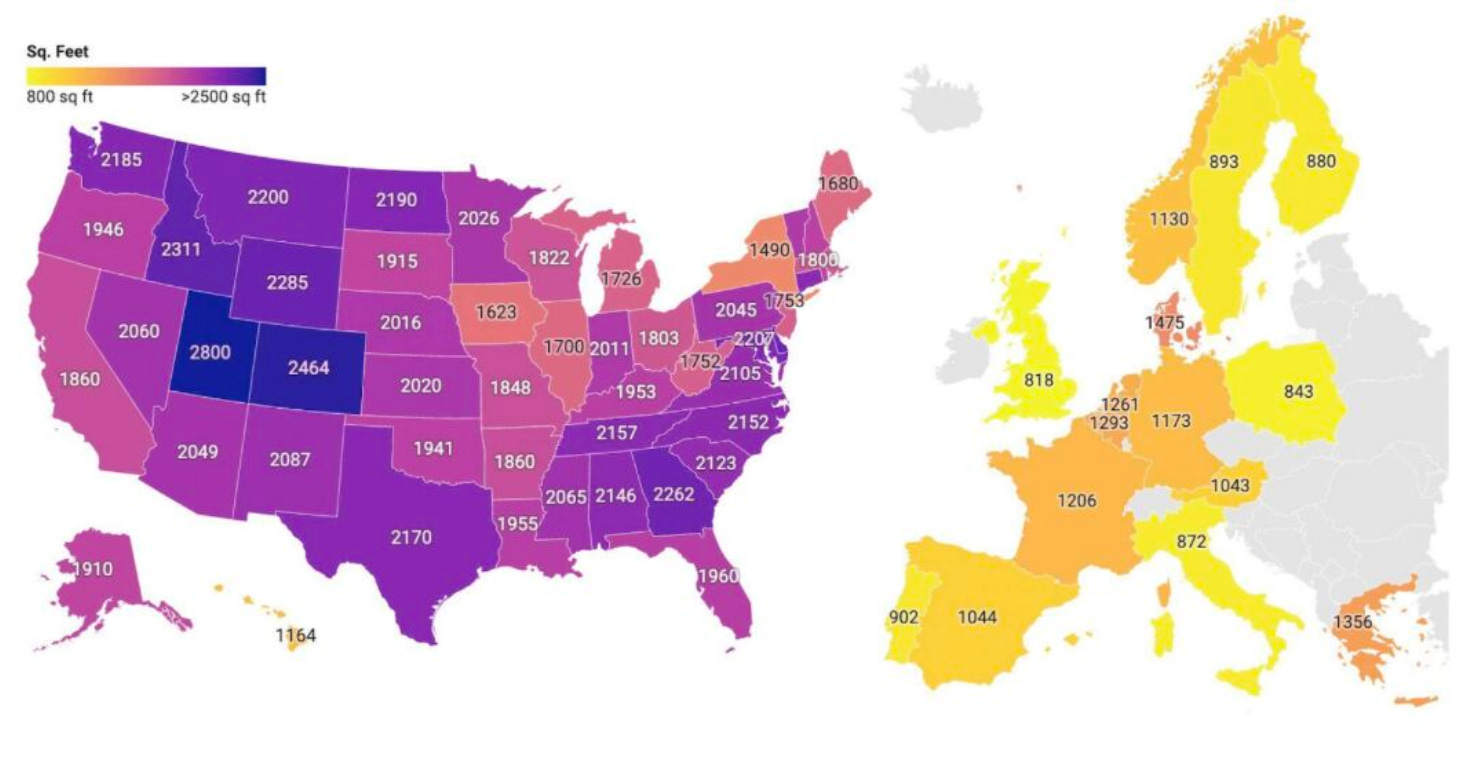
The difference between Utah and the rest of the states is quite striking (almost 30% bigger homes than most states), but also the difference between the US overall and Europe. According, to whatever aggregation this is measuring (is just the overall home sqft across the state? Is this zillow listings? What is the time range? I have no idea), Utah homes are the largest in the US and easily double in size of homes in almost every European country.
This post got quite a bit of engagement with commenters sharing lots of theories…
Utah has bigger families
Utah is status oriented
Utah has weird zoning laws
Utah has a lot of single family homes
Utah has basements
etc.
I went searching online for the source of this chart and found a reddit post which also did not share any source.
I did finally track down what I think is the source from a website called Visual Capitalist. There you can find very large (and imo unhelpful) infographics. Sure enough, the authors are using Zillow sales listing in an unspecified time range.
So now that we found what I think is the data, I tried to verify their finding with another source and more recent data. The Federal Reserve Bank of St. Louis keeps a lot of great national datasets including one on house listings from Realtor.com. I pulled the median house sqft size from February 2025 to January 2026 and plotted the data below.1
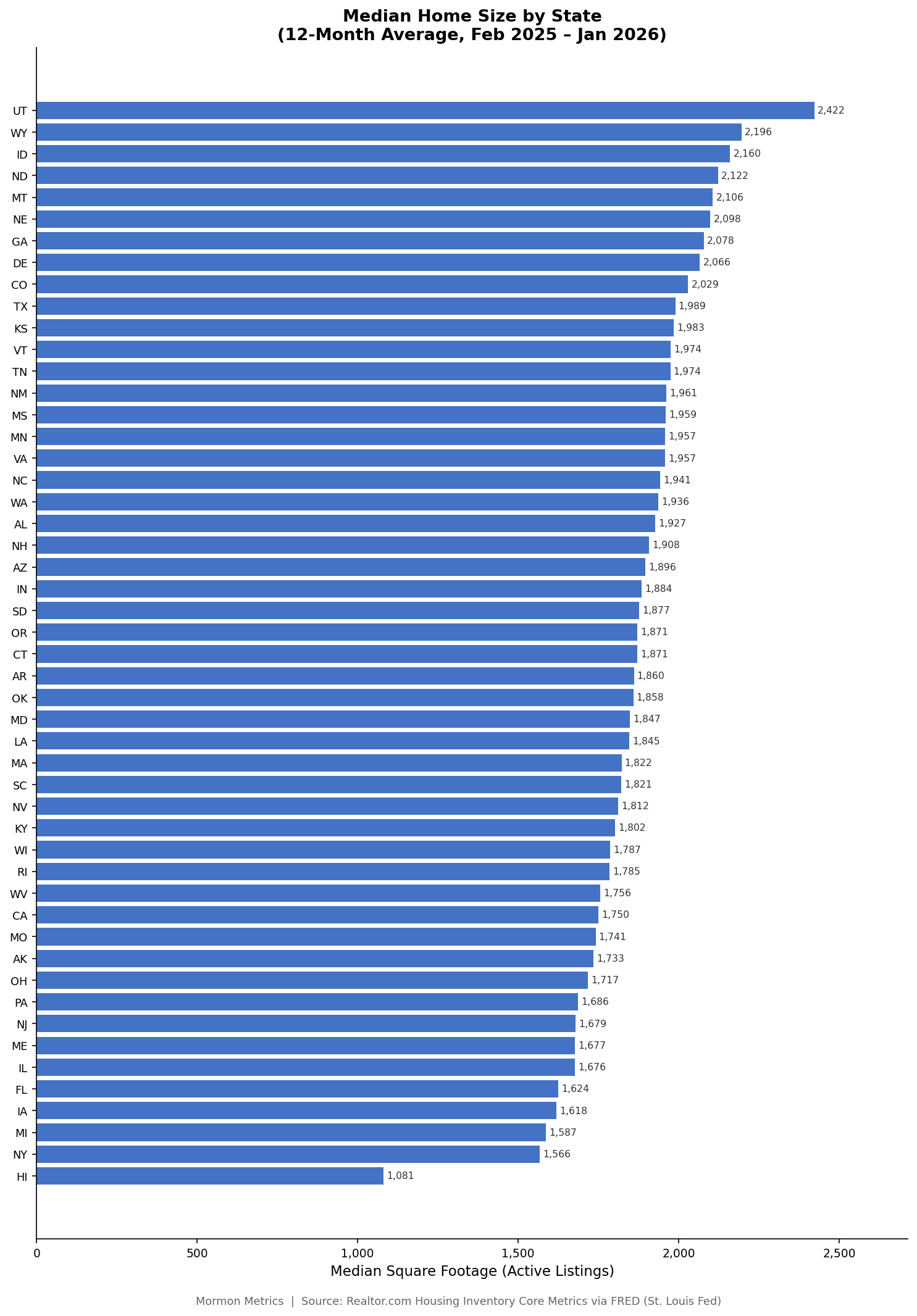
So, as you can see, I confirmed this trend. When you look at houses being sold, Utah ranks number one in home size with notable separation from all other states. I didn’t pull data on housing data in Europe, so that part is still unverified.
One caveat I will mention is a possible new building bias. Utah has been building out a lot of places with brand new developments. I believe the average new home today is much bigger than it was 50 years ago. Other more populated and dense states simply may have more existing housing and may not have as much room to build things out. It wouldn’t surprise me if Utah had a higher proportion of brand new house listings compared to other states. I haven’t confirmed this theory with data, just my own theory to add to the list above i guess.
Writing this post, I think there is more here to dig into in future weeks. Can I successfully explain or support any of the theories above with data? Do high LDS areas correlate to big homes? Is it a function of family size? Is it because of population growth and new housing? Perhaps there are other theories I can look at?
Let me know what you think below.
Next week, I plan on sharing the “Are Latter-day Saints beating the secular headwinds?” post. See you soon!
Code is viewable here.
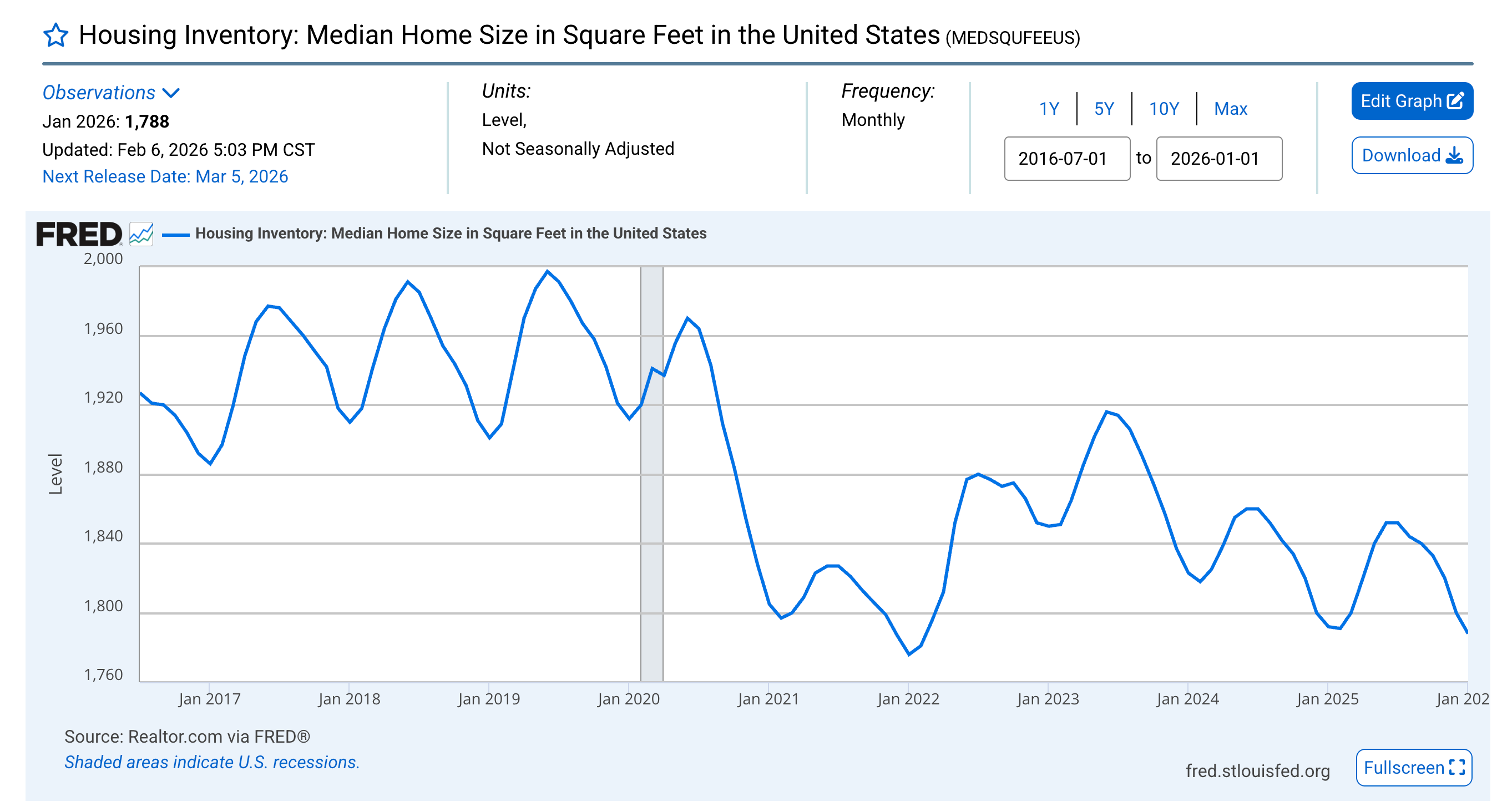
One thing I learned writing this post is that average sqft in house listings have seasonal differences. Check out the chart below (👇) so I think the differences between my data (Utah avg sqft listing is 2422) vs the zillow data (Utah is 2800) could be that the zillow data was only pulled during a higher season whereas mine was averaged out over a whole year.
So interesting!
This is really interesting! I’ve lived both in Utah and in other parts of the country (I currently live in DC) and from what I’ve observed it appears that most new homes in Utah are being built on the suburban fringe versus in existing urbanized areas. These new developments may be less space constrained and thus end up consuming more space. Though this story of suburban development is generally the case in the rest of the country, another factor may be the relatively strong economic growth in Utah over the past decade or more and the positive correlation between income and the square footage of housing (at least in the US). Zoning also plays a big part in determining median home size, although in most of the US single-family detached homes are allowed by-right while multi-family or “missing middle” type housing (like rowhomes, duplexes, attached homes, condos, etc.) are only allowed in urban cores. There are a lot of regulatory factors (zoning, minimum parking requirements, other car-centric codes) that subsidize and enforce suburbanization across the country, but I don’t necessarily see those factors as being relatively stronger in Utah, so I would assume cultural and economic factors are maybe more of a factor here. Thanks for this thought-provoking post!