
Data Behind The Texas Temple Controversy
Structurally, how is a temple defined? What makes something a temple vs. just another building?


Introduction
In a recent announcement by the Church of Jesus Christ of Latter-day Saints, plans for the construction of an LDS temple in Fairview, Texas have stirred up a wave of controversy. The proposed temple's location change and the contentious issue of the steeple's height and lighting have become hot topics of discussion. With the Fairview city council stepping in to address concerns about the temple's design, the community awaits a resolution to this ongoing debate1. Additionally, there is other temple drama in Bakersfield, CA for similar problems of the proposed temple being above city code height restrictions2. As I continued to research, cities vs. the church problems seem to be a pretty common occurrence with new temples34 - even in Utah5.
Relevant questions to this debate:
What are typical temple heights?
Do temples need steeples? / Is the Angel Moroni necessary?
Do temples need to be white?
These questions are relevant because many of the community problems with the temples are about the height, lighting, and steeples. The idea is if the church designed temples that perhaps didn’t have some of these strong features, then, new temple proposals could both be valid temples for Mormons, but also more amiable to general city laws and ordinances.
I am not interested in diving into this debate here, but let’s look at some data on temples that have already been built.
Data
For this post, I scraped data from two different sites. This site is really good and has most information you might be interested in for Temples from dimensions, timelines, land plots.. The other site is just to obtain the temple heights which were surprisingly missing from the first site. All of the code I used to scrape the data is in this github repo.
What Are Typical Temple Heights?
Looking at the graph below, the data is bunched up on the left side mostly from the “cookie-cutter“ temples they built in the late 90s early 2000s. These temples are 71ft high and are a bit smaller than other temples by sqft.
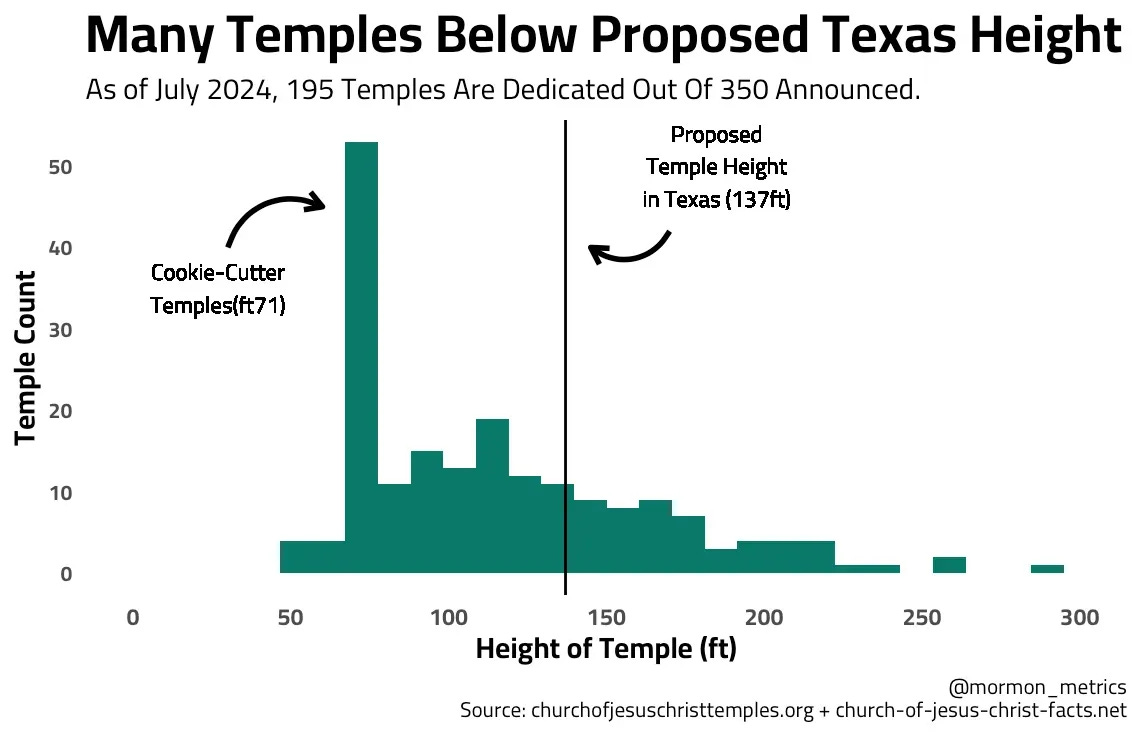
The original proposed height for the Temple in Texas falls somewhat in the middle of the height distribution of all dedicated temples, but on the higher end (71st percentile to be exact). It seems like it could be reasonable downsized and not look weird when lined up against other temples.
While the city height limit for Fairview, Texas is 35ft, the current ward building received an exemption and stands at 68ft. There are no temples that meet the 35ft minimum height, but there are a few that meet the 68ft mark. Perhaps it would be beneficial to design a smaller (perhaps wider) temple that would be more small town friendly.
Also, for those interested, the tallest temple is none other than the Washington D.C. Temple which stands 288ft tall.
Do Temples Need Steeples? Is Angel Moroni Necessary?
I think these two questions are inherently connected; Angel Moroni is typically on a steeple! We can see that almost all of temples have steeples (most having exactly 1), but 3 temples have no steeples.
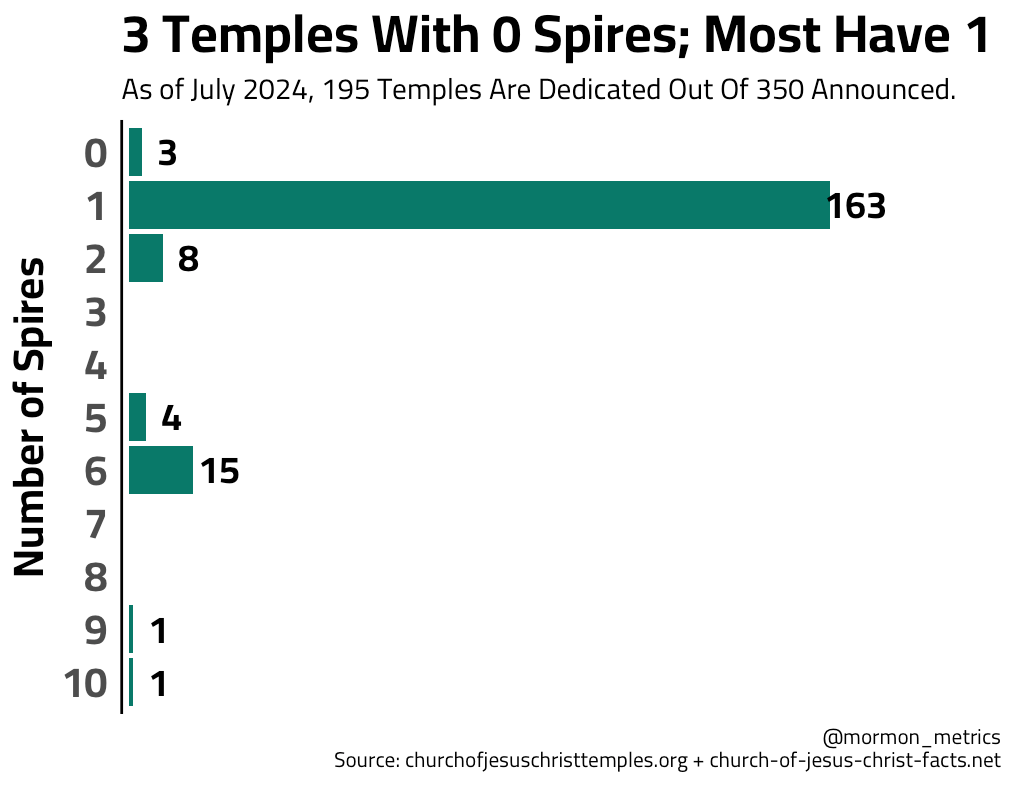
These three temples are Alberta, Canada, Mesa, AZ, and Laie, HI. Personally, I love the look of these three temples. They look classic with columns and boxed levels. There are a few temples with more than one spire including the temple with the most spires which is the San Diego, CA Temple.
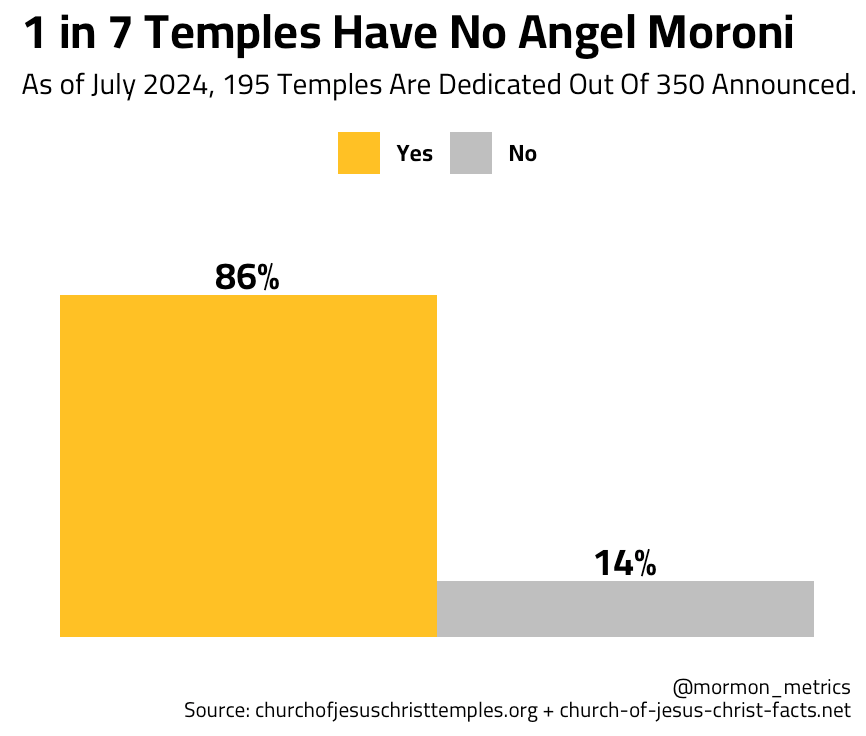
As is evident in the chart above, there are several temples (22) without the Angel Moroni - including some with spires. So, spires are necessary for Angel Moroni, but not sufficient for him. The Helena, Montana Temple is an example of one with a spire, but without Angel Moroni.
Do Temples Need To Be White?
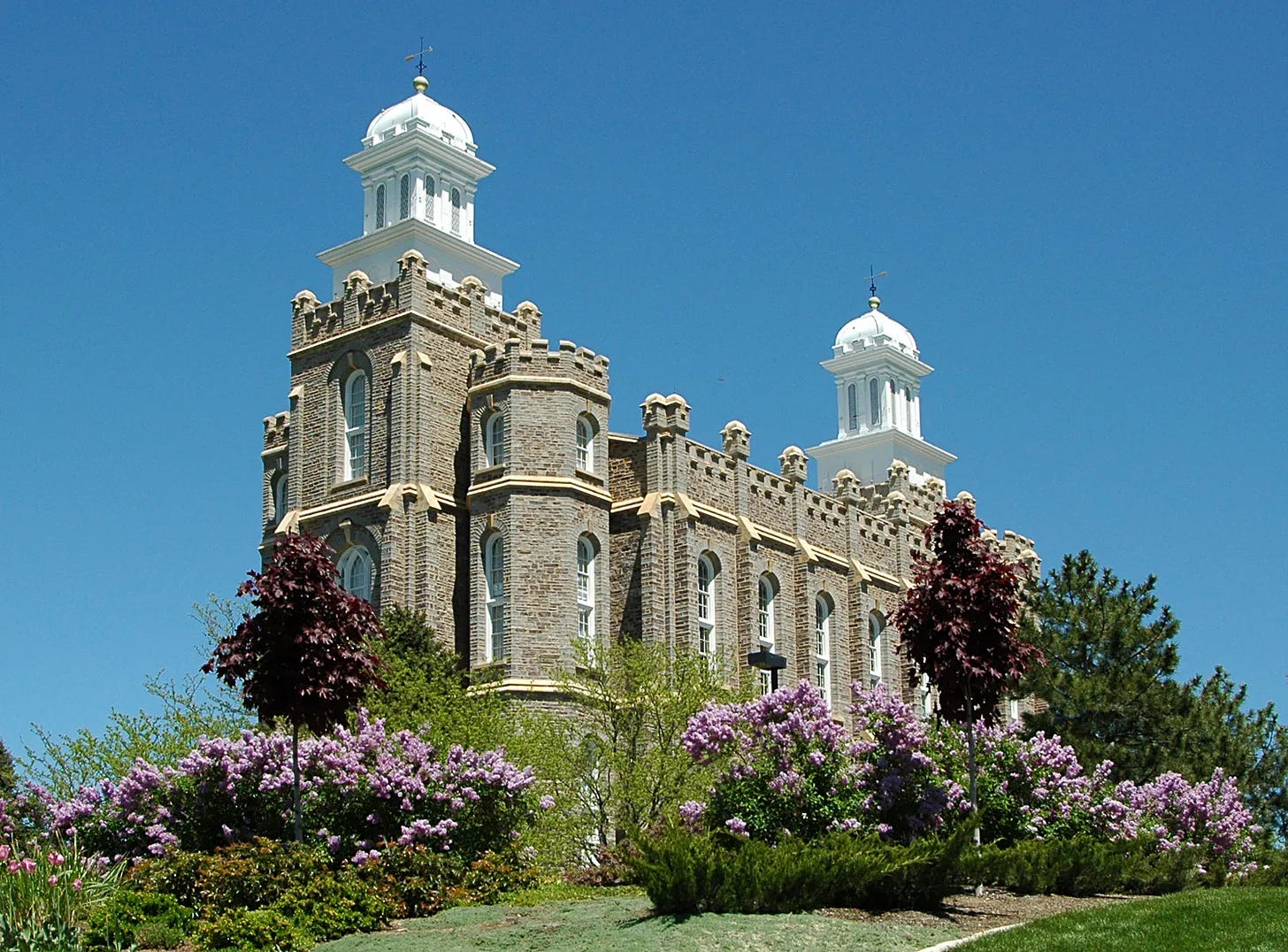
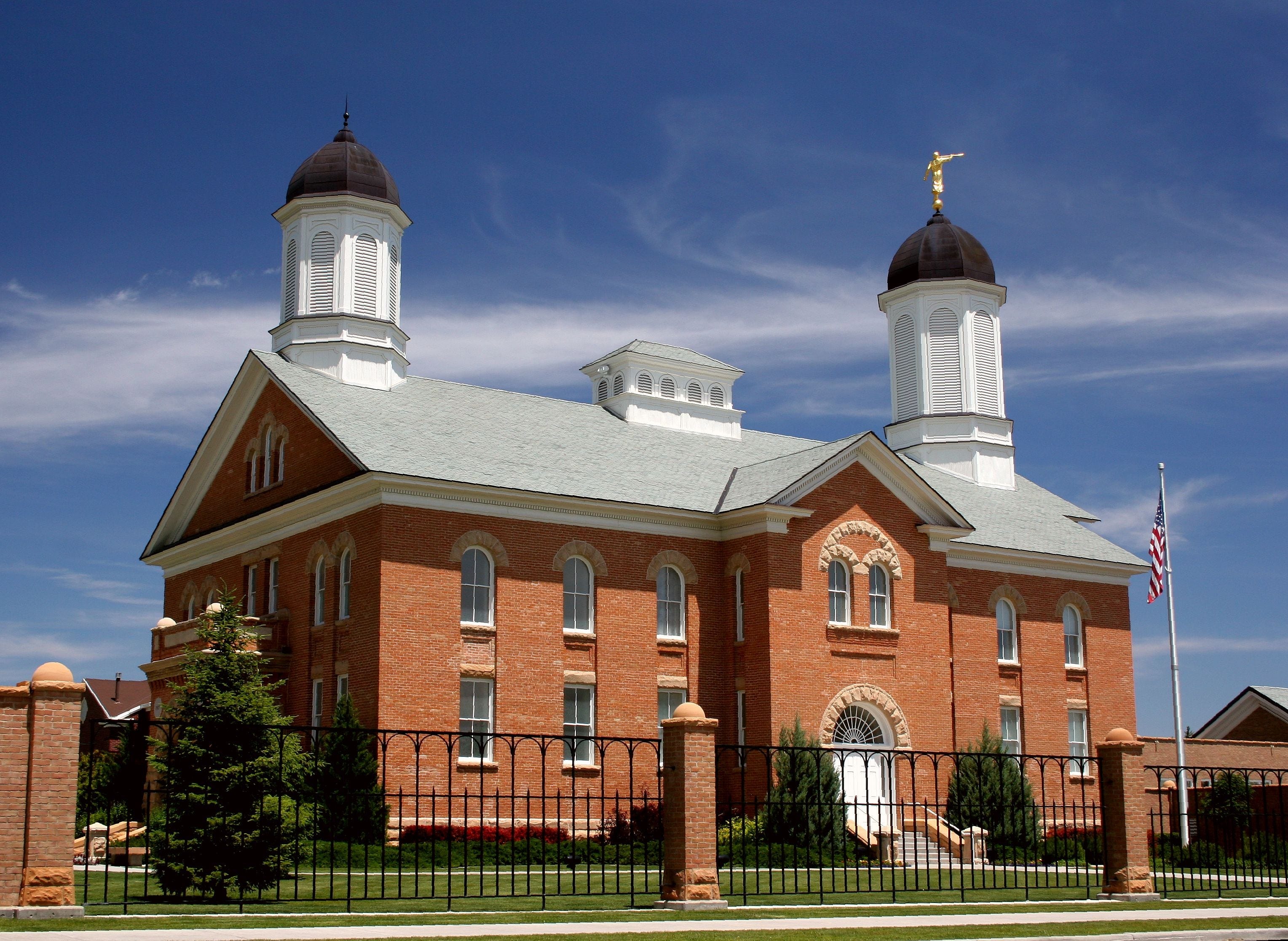
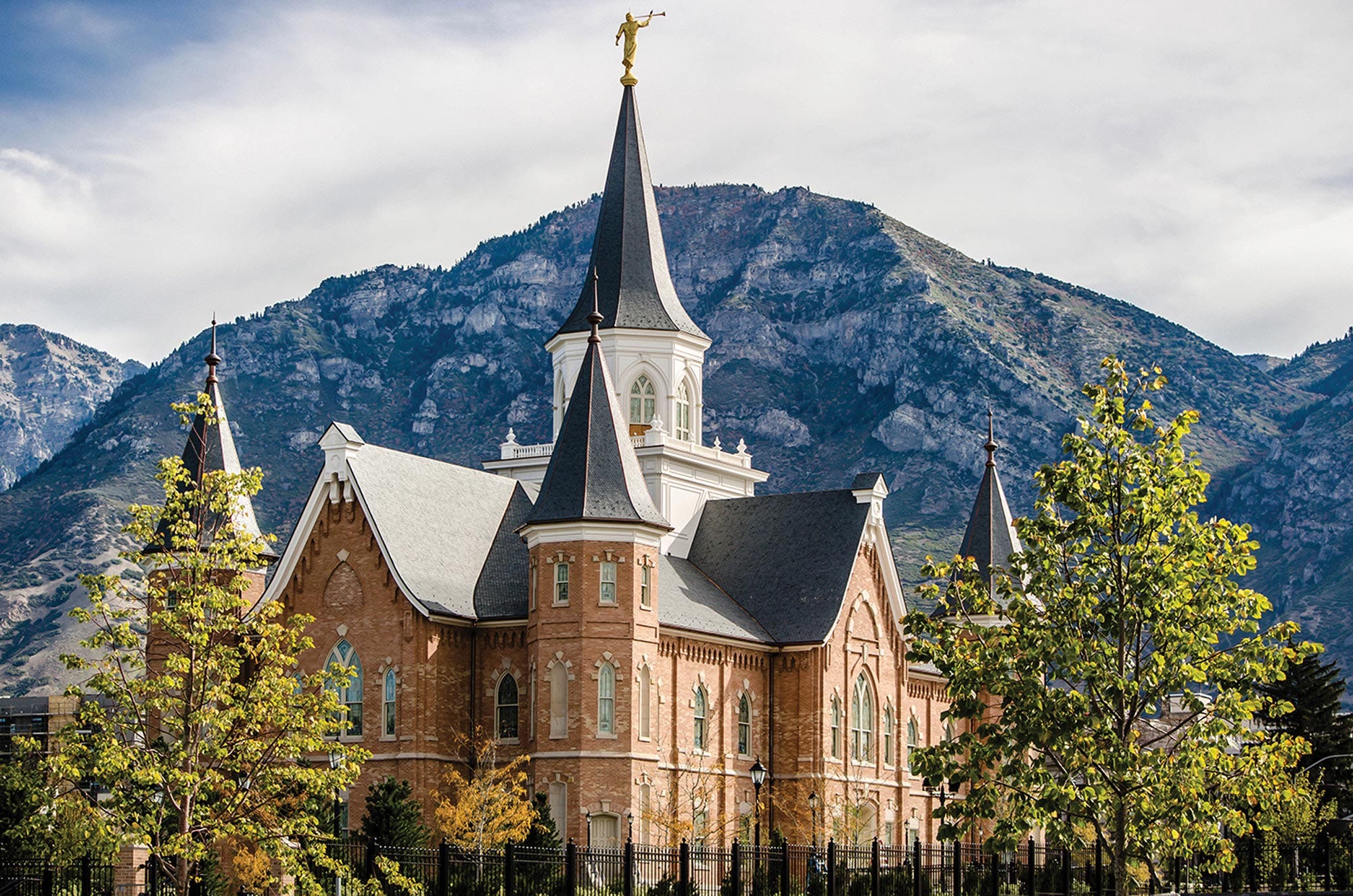
I didn’t find any comprehensive dataset for this question online and I’m frankly too lazy at this point to go through all 195 temples and label them. But, no, temples do no need to be white necessarily though I imagine most are. Here are a few examples of temples that are not white/off-white/beige:
Logan, Utah Temple - grey/brown
Vernal, Utah Temple - brick red
Provo, Utah City Center Temple - brick red
Conclusion
Hopefully, you found this discussion helpful and enlightening. Feel free to leave comments or thoughts about something I missed or data you would be interesting in seeing with temples or in a future post. Sometimes data is not possible to come by, but a lot of times it is!
Discussion
Can any building be a temple? Or must the building meet certain requirements? What are these requirements in your opinion (if any)?
News article on the recent events and another article specifically from fairview community website
Cody, WY temple was approved, but with difficulty. Issues with height.
Lone Mountain, NV was approved, but with difficulty. Issues with height.
Heber Valley, UT didn’t have a height issue, but a lighting issue.
Thanks for the interesting read! That’s so crazy that the DC temple is 288 ft tall! It really is quite breathtaking when you get your first glimpse of it. I have never thought about temple heights until now. Pretty cool to think about!