
News Engagement, Voter Turnout, Political Activity
Exploring Mormon political activity


Introduction
Voting day is November 5th, so in only a few days. Let’s look at some recent data in the last several years about Mormon political activity.
Today, we will look at:
News Interest data from 2008-2023 from the Cooperative Election Study
Utah % Voter Turnout from the US Elections Project
A few questions asked on the 2020 Cooperative Election Study about political activity
Charts
News Interest
First, do you think Mormons are interested in and follow the news? And what has this looked like over time?
When looking at the most recent CES data, things look quite average. There are religious groups that show much more news interest and also the reverse.
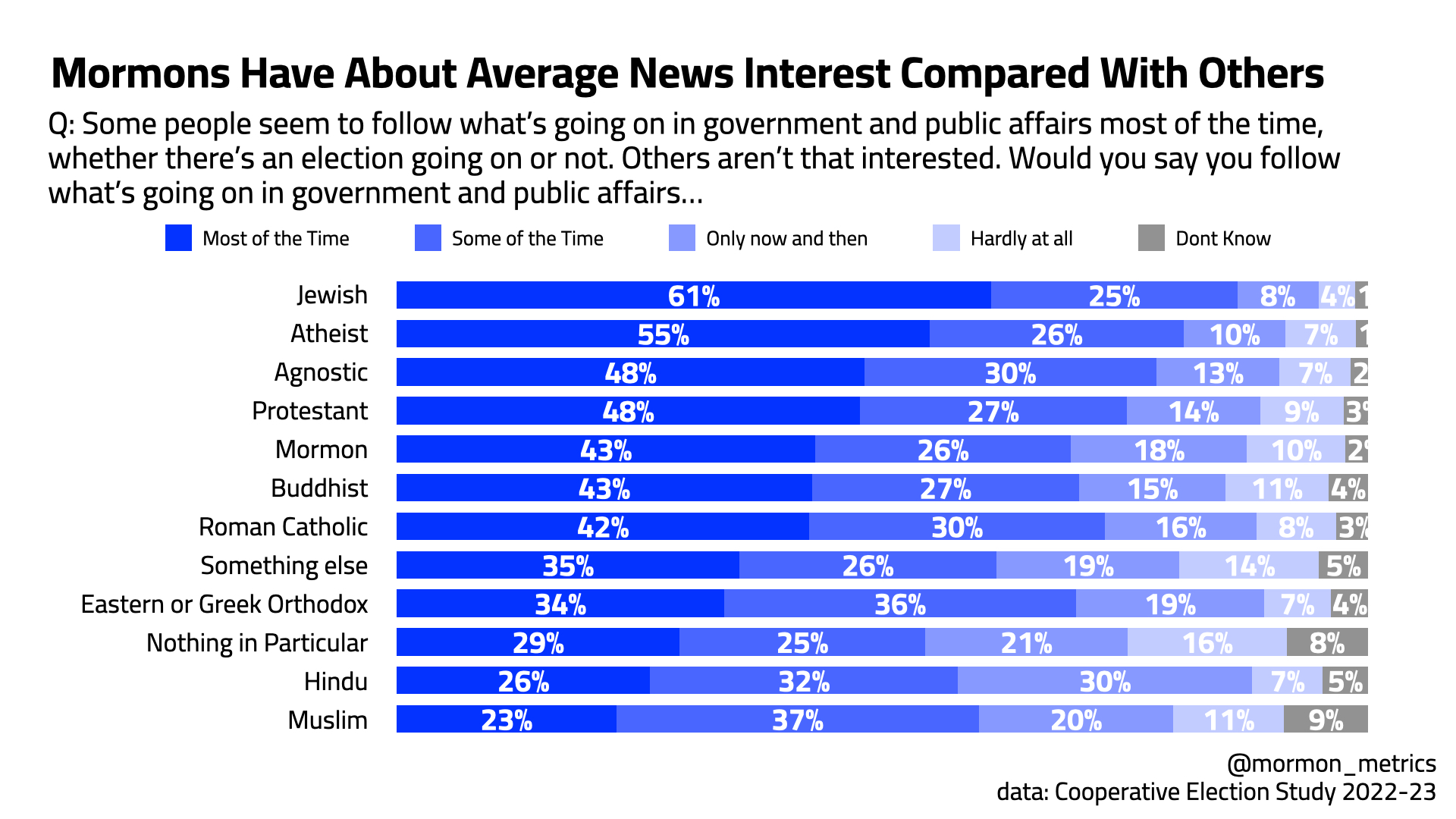
Jews, Atheists, and Agnostics show higher engagement than others - a theme we will see in later data as well!
When we look at things over time, it's a bit more interesting. At first glance, the Mormon line hugs the US National line snuggly.
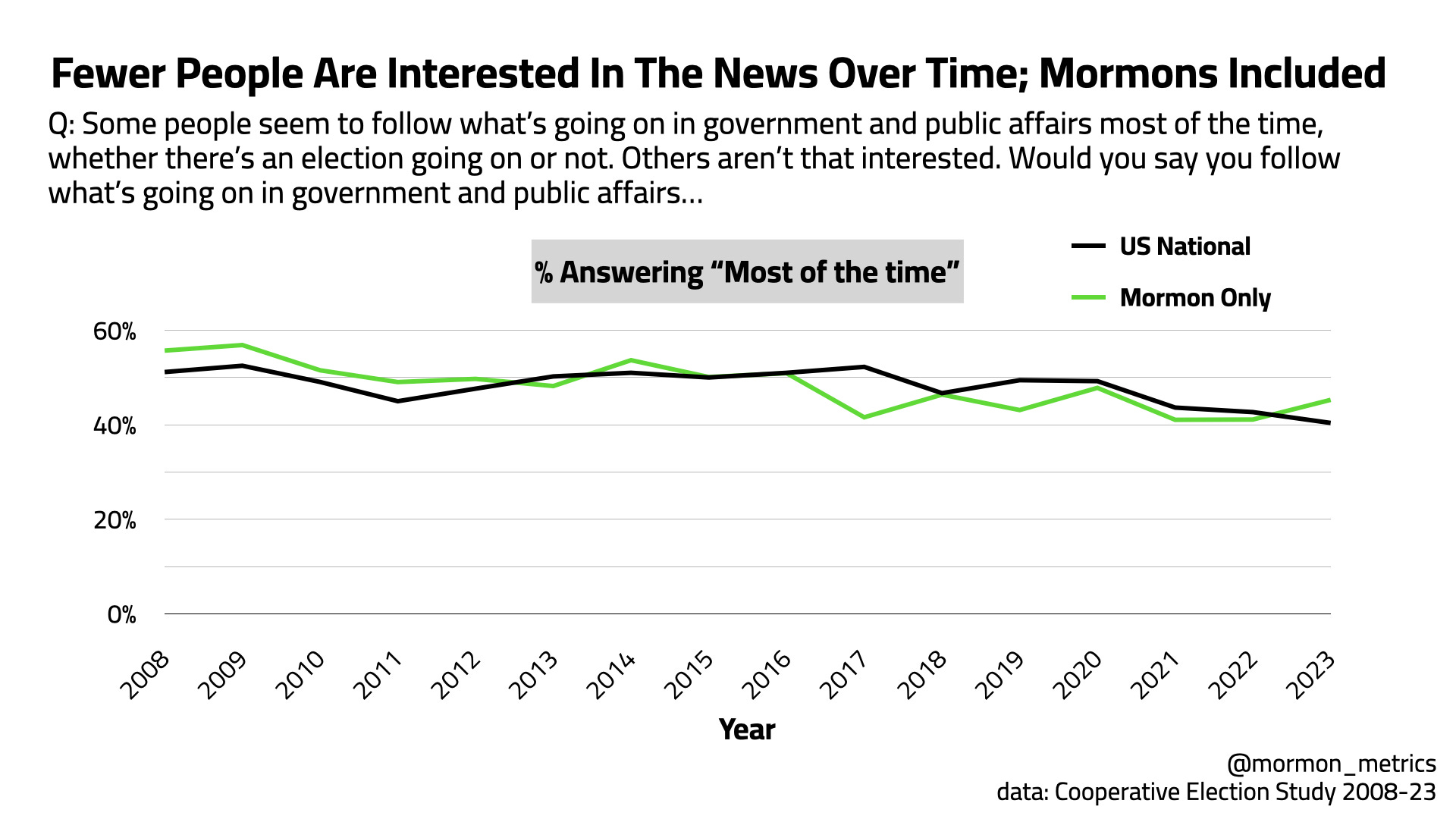
Though, looking closer prior to 2016, Mormons seemed to be on average more interested in the news compared to the average American; however, with the dawn of the Trump era, Mormons have been less interested in the news.
You will also notice that since 2008, fewer people in the US are indicating strong interest in the news in general, and Mormons follow this trend; perhaps even more strongly. In 2008, 50% said they followed the news “most of the time,“ but that has now dropped to 40% in 2023. For Mormons, 55% in 2008 vs. 41% in 2022.
Utah Voter Turnout
Utah and Mormons are connected. And, while figuring out whether someone voted via survey has challenges, we can use the Utah vote turnout as a barometer for Mormons since 64% of the state population is on church records.
Because midterm elections have lower turnout, I separated the Utah voter turnout charts accordingly. Viewing it this way, we see the same trend in both charts: since 2018, Utah voter turnout has increased and is now above the national average.
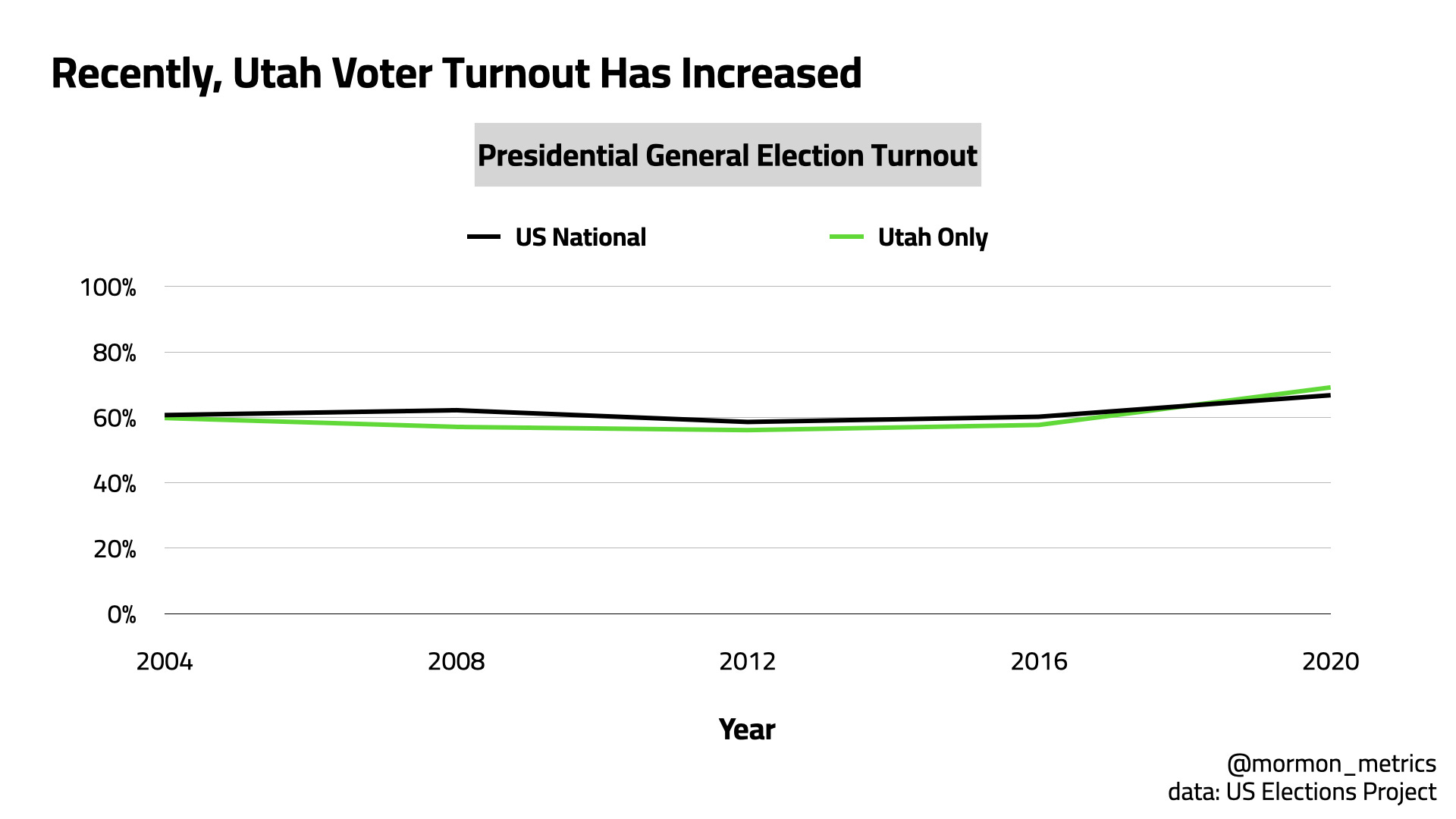
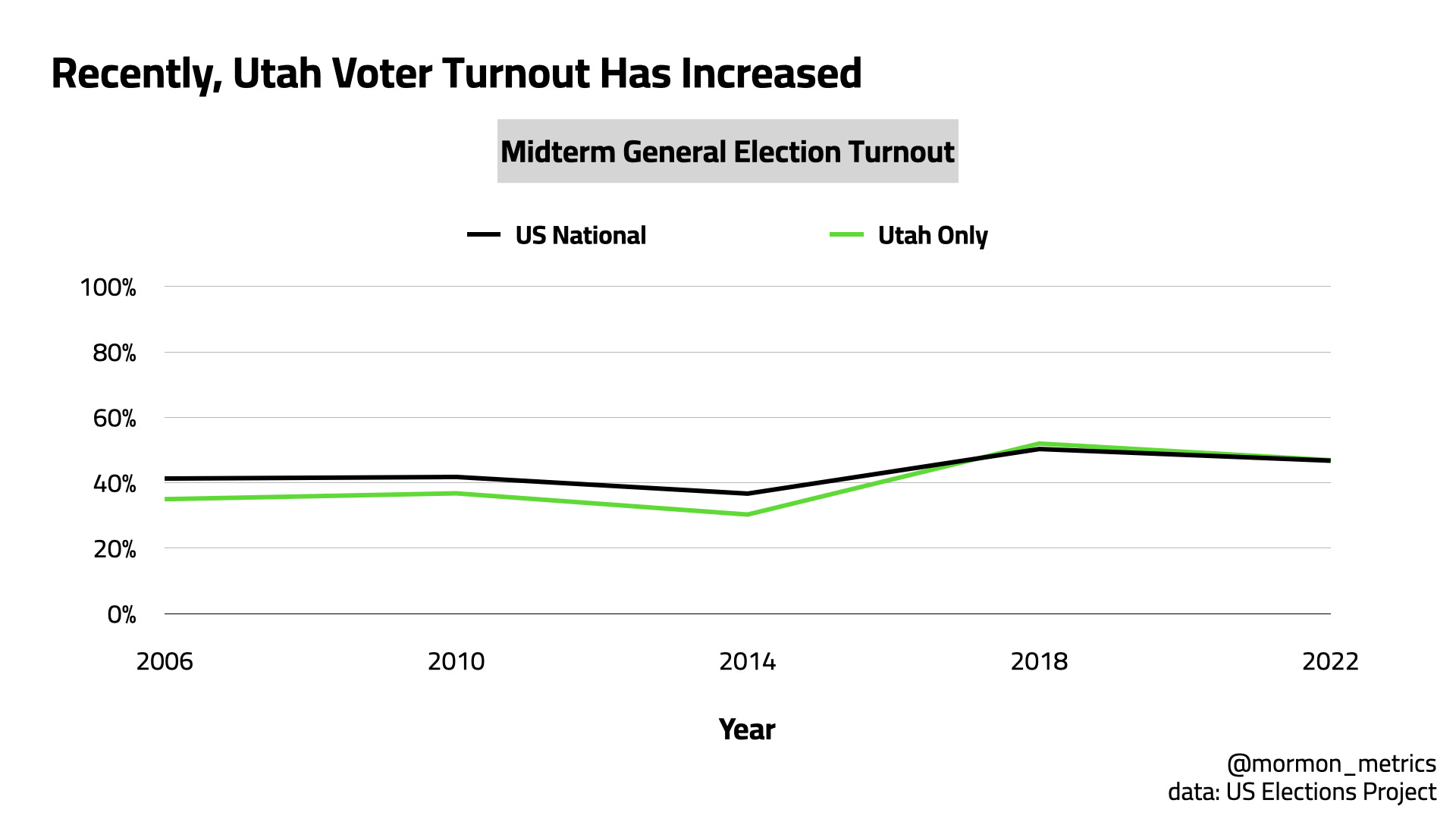
Before seeing the data, I hypothesized that voter turnout in the Trump era would be lower not higher for mormons, but it simply wasn't true.
Reading into things more, I believe the reason Utah saw increased voter turnout despite less interest in the candidate and the news was 2018 was the first election where mail-in ballots were widely adopted in Utah which increased voter turnout. Utah has been an early adopter of mail voting which could explain the difference in turnout vs. many states who have not yet adopted it at scale.
Political Activity
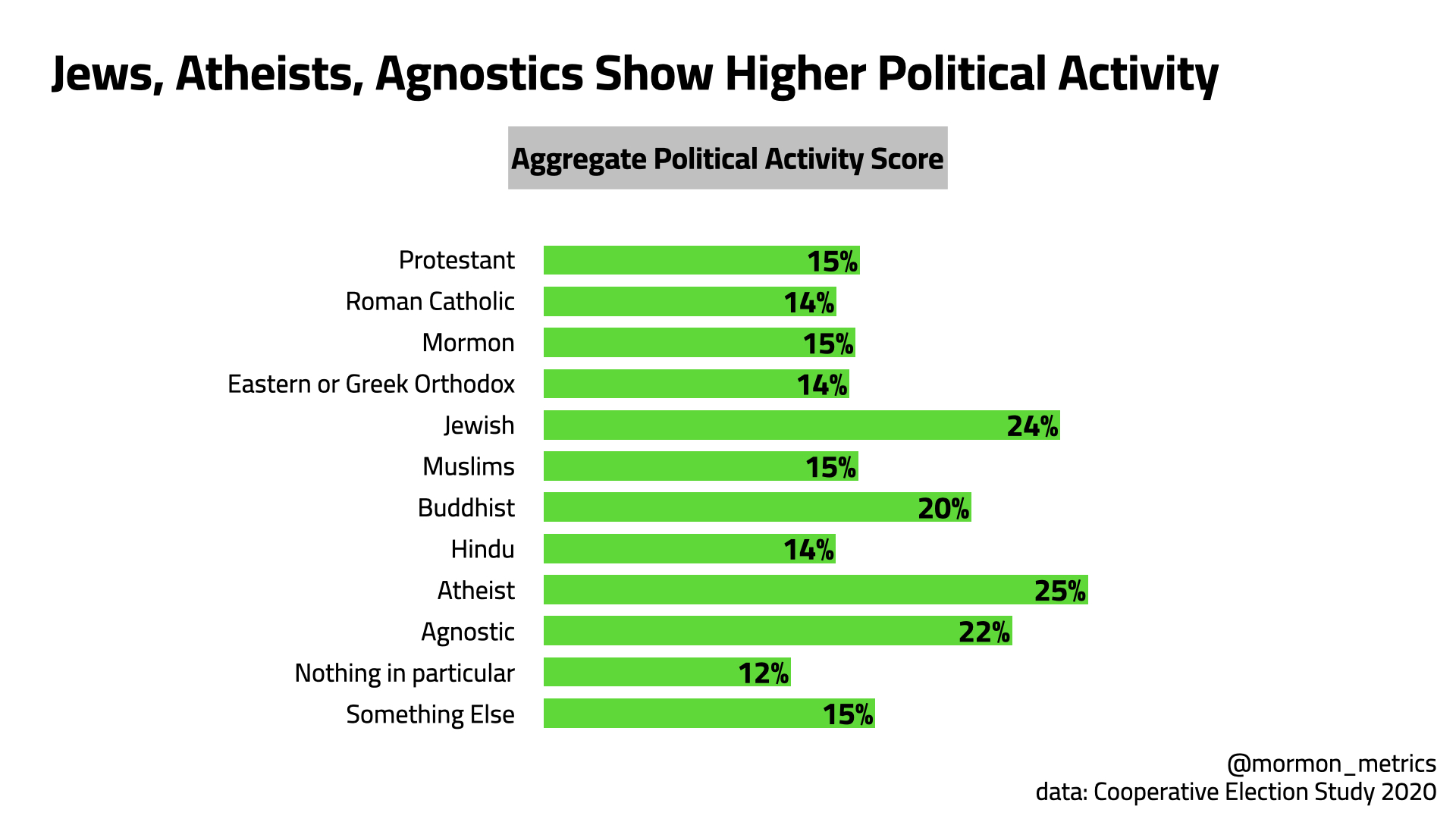
First, let’s look at all the political actions in aggregate. For a combined score across six different political actions, Mormons look similar to other christians. Jews, Atheists, and Agnostics clearly show higher political activity and the religious “Nones“ show lower.
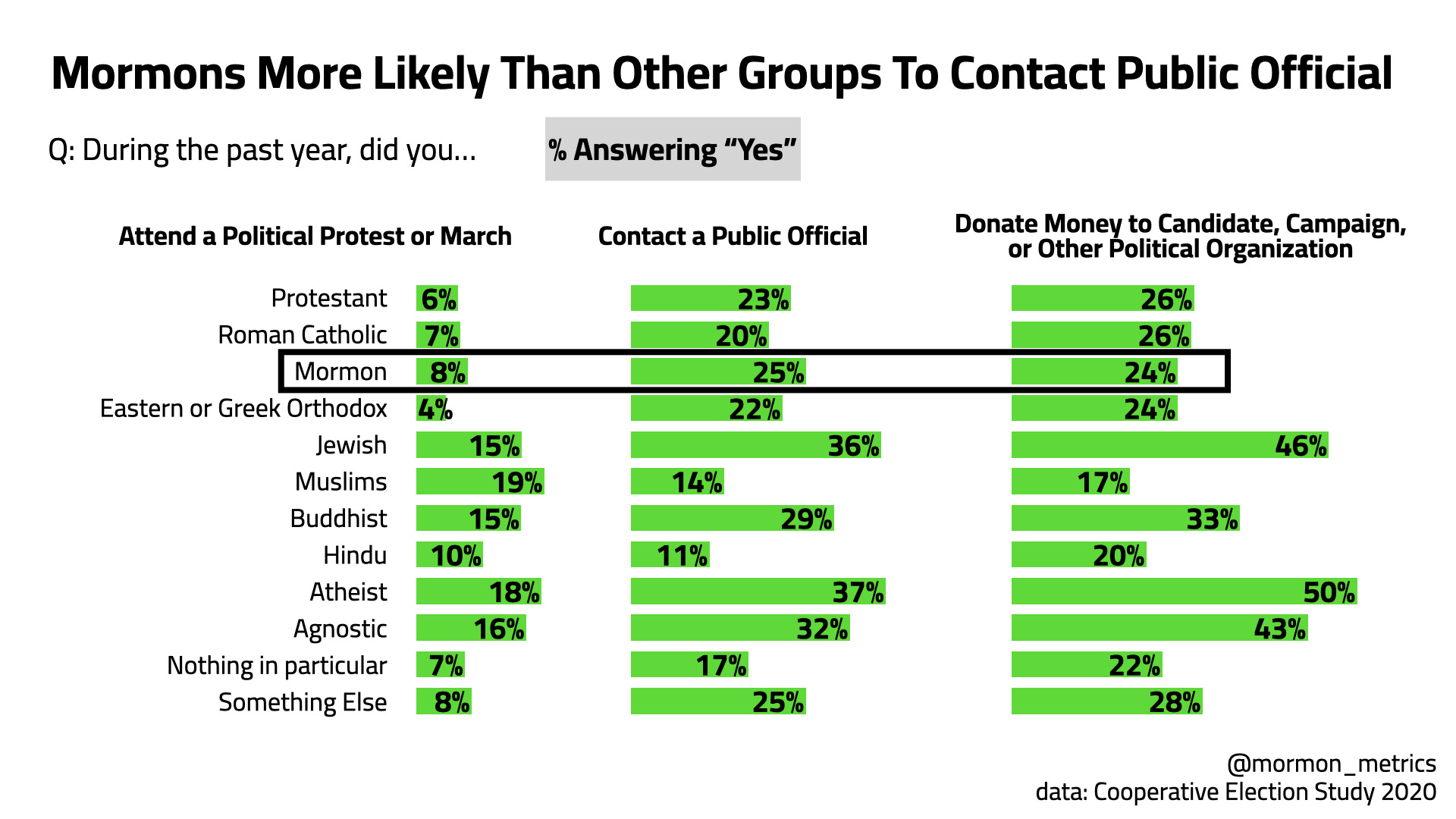
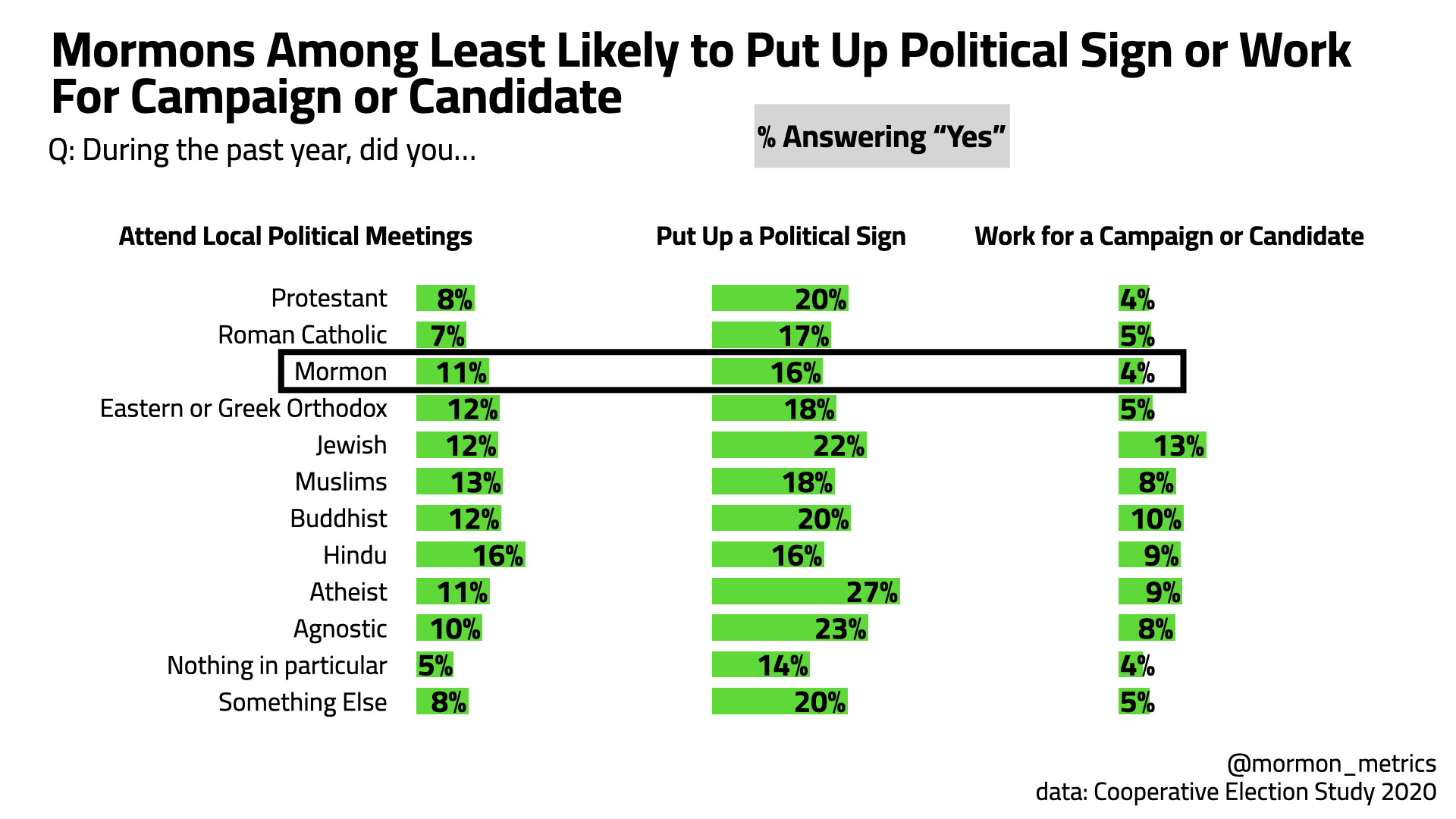
When we look at the specific political actions, we see Mormons are a bit more likely than some groups to “Contact a public official“ and a bit less likely to “Put up a political sign“ or “Work for a campaign or candidate,“ but in total mormons are pretty average in their political engagement.
Conclusion
Mormons show average amount of engagement in the news with less engagement in the Trump era.
Utah, a state with many mormons, has seen higher voter turnout in recent years, but I hypothesize the increase is due to mail-in voting adoption.
Mormons show an average amount of political activity and are comparable to other Christians. Christians and Mormons are both gapped by the most politically active groups: Atheists, Agnostics, and Jews.